Description
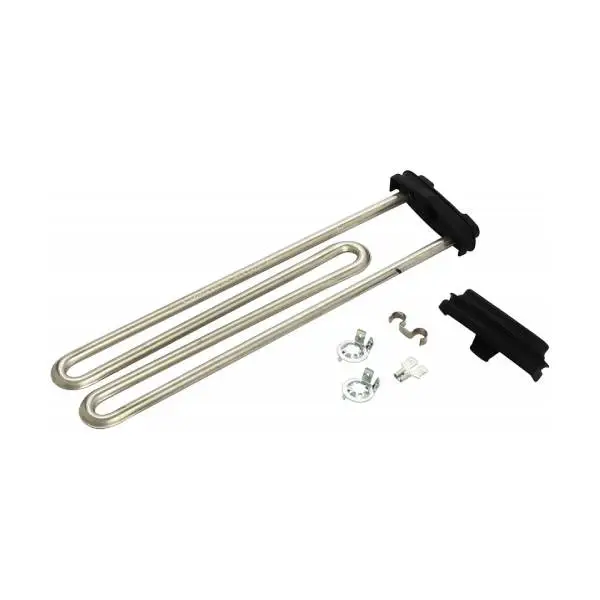
Original heating element 2.1KW for Miele washing machine Miele 6260486
Just before ordering – safety and precise fit!
Clothes come out cold even on the 60°C program? The heating element is the “hot heart” of the washing machine – it is responsible for heating the water to the temperature required for effective cleaning. When the heating element burns out or is covered with thick limescale, the water remains cold and the laundry does not clean properly. Using an original Miele heating element is critical for safety and the life of the machine – non-original heating elements may not fit the dimensions of the tank precisely, causing a short circuit or even electric shock. Now click on the ‘Check model compatibility’ button at the top of the page and our system will immediately confirm that the part is suitable for your machine.
The machine stops in the middle of the program? The original body returns perfect heating
In our experience at the official Miele service laboratories , the heating element is one of the first components to wear out in a washing machine – especially in Israel where the water is hard and rich in limescale. The combination of hard water, high temperatures and frequent use causes a thick layer of limescale to accumulate on the heating element. When the heating element is damaged, clear signs appear :
✅ The clothes come out cold. – Even after a program at 60°C or 90°C
✅ The machine stops in the middle of the program – The control card detects that the water is not heating and stops the operation.
✅ Error code on screen – Heating or temperature sensor malfunction
✅ The door stays cold during washing. – Check 15-20 minutes after the program starts: If the door does not heat up – the heating element is not working.
✅ The clothes stay dirty. – Detergents are ineffective in cold water.
Why a genuine Miele heating element? Certified & licensed professional technicians highly recommend a genuine element: precise power (2.1KW) that heats water at optimal speed into the tank, a scale-resistant structure with a special coating that extends the life of the component, maximum electrical safety with double insulation and short circuit prevention, and a perfect hermetic seal to prevent water leaks into the machine.
How do you know that the heating element needs to be replaced?
Simple home test: Turn on the machine on a 60°C or 90°C program. Wait 15-20 minutes and check if the machine door (glass) heats up. If the door remains cold – the heating element is not working. Additional signs: an error code on the screen (depending on the model), the machine stops in the middle of the program , or an unusual sound (buzzing or clicking) indicating a failed attempt to turn on the heating.
What causes the heating element to burn out? The main cause in Israel is scale . The scale layer serves as “insulation” between the heating element and the water, causing it to overheat and burn from the inside. Other causes: water that has entered the machine’s electrical system , a short circuit in the control board , or a defective temperature sensor that causes excessive heating.
Expert tip: How to extend the life of your new heating element
✨ Run a hot cleaning cycle with Limescale remover Once every two months – this removes scale and prevents buildup
✨ Use soft water or a water filter. If the water in your area is particularly hard
✨ Avoid 90°C programs except when necessary. – High temperatures accelerate the accumulation of scale.
✨ Ensure complete drainage after each wash. – Water that remains in the tank with scale is harmful to the heating element.
✨ Run the “Drum Cleaning” program once a month. – Special cleaning agents keep the machine free of limescale.
Technical
| attribute |
value |
| brand |
Honey |
| Manufacturer's SKU |
6260486 |
| Product Name |
Heater Element |
| supply |
2.1KW (2100W) |
| Tension |
230V |
| compatibility |
Miele washing machines of various models – precise compatibility testing required |
| Compatible SKUs |
6260483, 6965561, 6883581, 6260482 |
| material |
Stainless steel with double insulation and hermetic sealing |
| Maximum working temperature |
up to 95°C |
| Installation difficulty level |
Complex – requires rear/front panel disassembly, disconnection of electrical connections, and resistance testing |
| Estimated installation time |
60-90 minutes (experienced technician) |
| Required tools |
Phillips screwdriver, flat screwdriver, multimeter (for resistance testing), wrench |
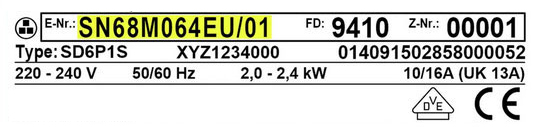
Locating the model sticker on a Miele washing machine
Location of the model label on Miele machines: The label (data plate) is located on the inside of the door frame , just behind the rubber seal. Open the door fully, gently pull the rubber flap back and you will see the silver label.
Additional location: On some models, the sticker is on the back of the machine (on the metal panel) or under the top cover.
Important tip: Take a picture of the sticker and save it – you will need the exact model number to order matching replacement parts.
Frequently Asked Questions (FAQ)
Can I install the heating element myself or do I need a certified technician?
Installation requires technical knowledge and electrical skills . If you have DIY experience and understand electricity, you can perform the replacement yourself while observing strict safety rules. However, Miele strongly recommends that you call in a qualified technician - incorrect installation may cause a short circuit, electric shock or internal water leakage, which will cause serious damage to the machine.
How long does it take to replace the heating element?
An experienced technician can replace the component in 60-90 minutes , including dismantling the panel, draining any remaining water in the tank, disconnecting the connections, replacing the component, testing resistance, tightening, and testing operation. For a novice DIYer, the process can take up to 2-3 hours, especially if additional components need to be dismantled.
Where is the heating element located in Miele machines?
In most Miele machines the heating element is located at the back of the machine , under the tank. In some models it is at the front.
What is the difference between an original heating element and a replacement heating element?
An original Miele heating element is made of high-quality stainless steel with a special anti-limescale coating, double insulation to prevent short circuits and a perfect hermetic seal. It has undergone strict safety tests and is precisely designed for the dimensions of the Miele tank. Unapproved replacement heating elements (mainly made in China) may be made of cheaper materials that burn out faster, do not always have a good seal (risk of water leaks), and may void the warranty on the machine. Technicians recommend original heating elements or at least made in Italy – the higher price pays off in the long run.
How do I know if I installed the heating element correctly?
After installation, perform the following tests :
- Sealing test: Tighten the clamping nut securely, run a short cycle with a little water (without clothes) and check for leaks under the machine.
- Heating test: Run the 60°C program, wait 15-20 minutes and check that the machine door is heating up.
- Location check: Make sure the heating element is not touching the drum – during spinning if there is an unusual noise, the element may not be positioned correctly.
- Checking connections: Make sure all electrical connections are tight and insulated – a loose connection can cause sparks.
Will replacing the heating element also solve problems with a machine that stops in the middle?
Not always . If the machine stops in the middle of the program because the water is not heating – yes, a new heating element will solve the problem. But you must make sure that the problem is indeed in the heating element and not in another component : a damaged temperature sensor (thermostat) may transmit incorrect data, the control card may not turn on the heating, or a clogged pressure switch may prevent the heating from starting. It is recommended that a technician perform a comprehensive diagnosis before replacing the component.








 Plrom Electra service